Basics
What Is Air Pressure? Atmospheric Pressure Explained
Air pressure is the weight of the air pressing on everything around you. Here is what causes it, how it is measured, its value at sea level and why it changes.

Air pressure is the force of the air pressing on everything around you, caused by the weight of the atmosphere above. At sea level it averages 14.7 pounds per square inch, which is 101,325 pascals, 1013.25 hPa or 29.92 inHg.
Air has weight
A cubic meter of air at sea level weighs about 1.2 kilograms. That sounds like very little, but the atmosphere is many miles deep. Stack all of it over one square inch and it weighs about 14.7 pounds.
We do not feel that weight because air presses from every direction at once, and the air and fluids inside the body press back equally. You only notice when the balance shifts, such as when your ears pop on a mountain road.
Air pressure, atmospheric pressure, barometric pressure
These three terms mean the same thing:
- Air pressure is the everyday name.
- Atmospheric pressure is the scientific name.
- Barometric pressure is the name in weather reports, after the barometer that measures it.
Units at sea level
| Unit | Standard value | Where it is used |
|---|---|---|
| Pascals (Pa) | 101,325 | Science, the SI unit |
| Hectopascals (hPa) or millibars (mb) | 1013.25 | Weather worldwide |
| Inches of mercury (inHg) | 29.92 | US weather and aviation |
| Millimeters of mercury (mmHg) | 760 | Some weather services |
| Pounds per square inch (psi) | 14.696 | Engineering |
| Atmospheres (atm) | 1 | Chemistry and physics |
Switch between them with the pressure converter.
What changes air pressure
Height. There is less air above you the higher you go, so pressure falls: about 1 inHg per 1,000 ft near the ground, and half of the sea-level value at about 18,000 ft. See the chart in air pressure and altitude.
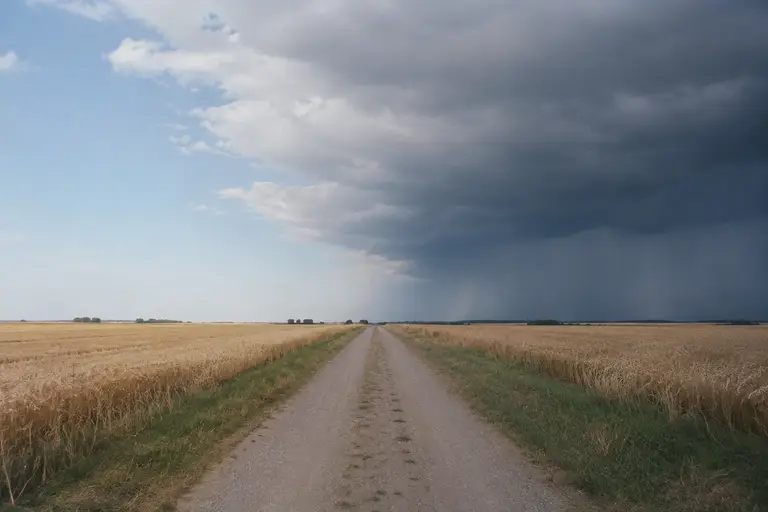
Weather. Sinking air builds high pressure, usually with clear skies. Rising air creates low pressure, with clouds and rain. These swings are small, rarely more than 3–4% at sea level, but they drive the wind and most of our weather. More in high vs low pressure.
Temperature. Warm air expands and is less dense than cold air, and that difference between regions helps build highs and lows in the first place.
How air pressure is measured
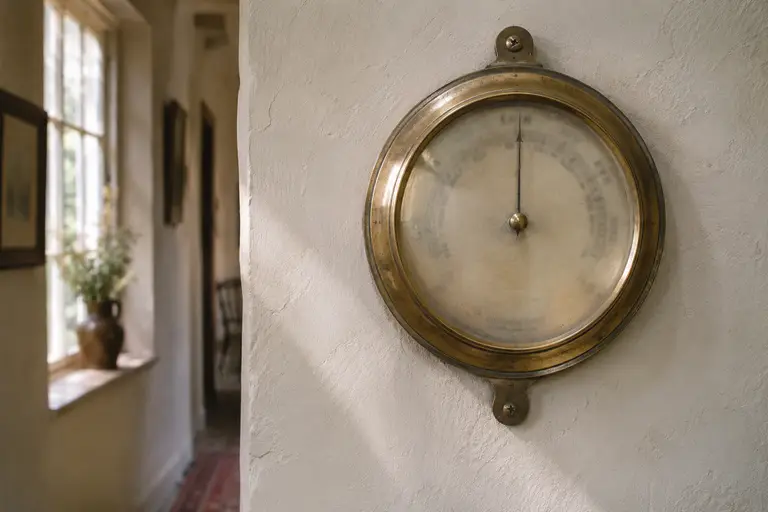
A barometer measures it, using a column of mercury, a flexing metal capsule or a tiny silicon sensor like the one in most phones. Weather services then correct each reading to sea level so that places at different heights can be compared. That is why the reading in a forecast differs from what a phone shows in a high city. See sea-level vs station pressure.
What is the air pressure today?
The live barometer shows today’s air pressure at the weather station nearest you, how it has changed in the last three hours and a 24-hour graph. To see every region at once, use the US pressure map.